01
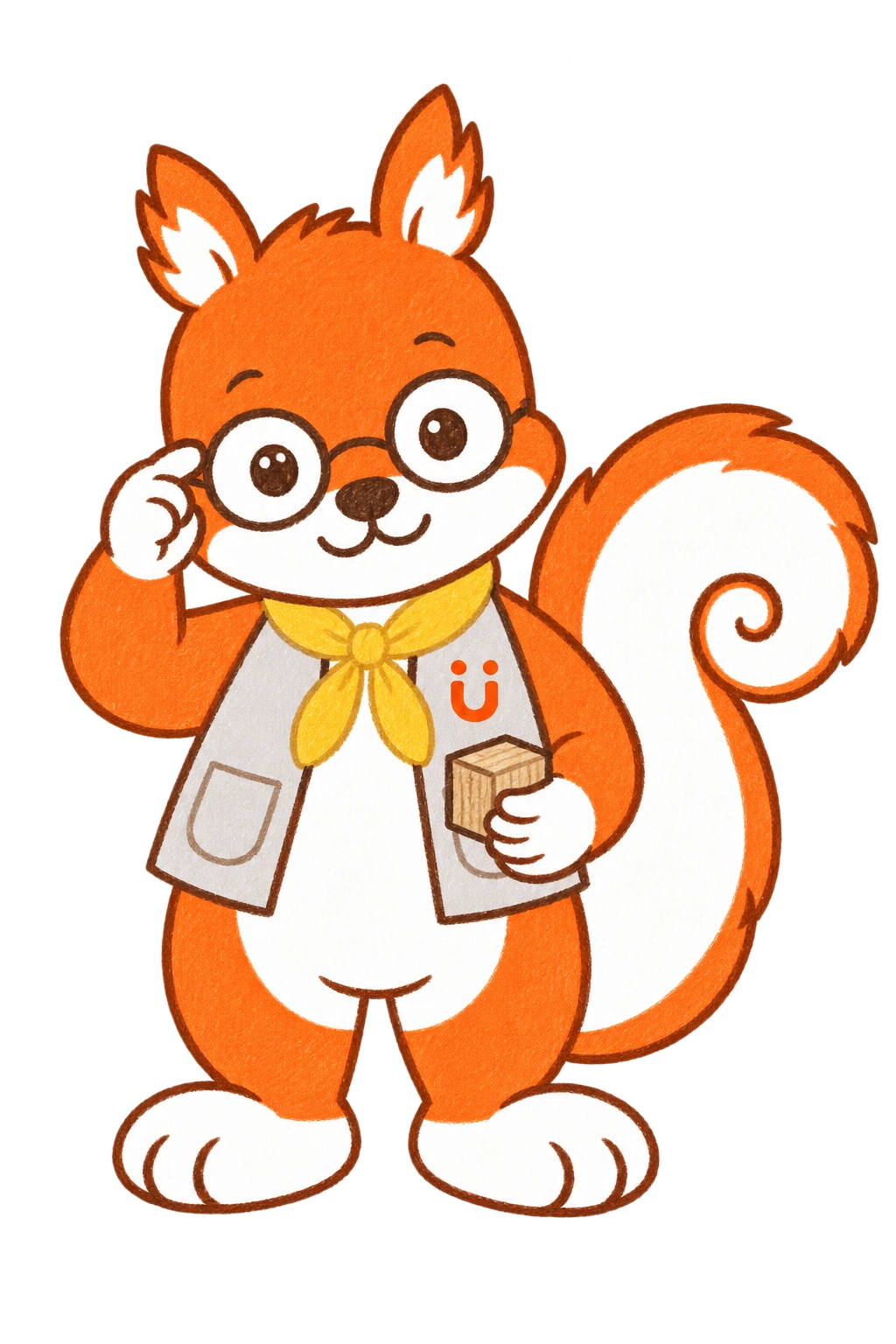
I wonder what I could make…
One block on top of another.
Hmm. What if I put this one here?
I love building things
and trying out ideas.
02
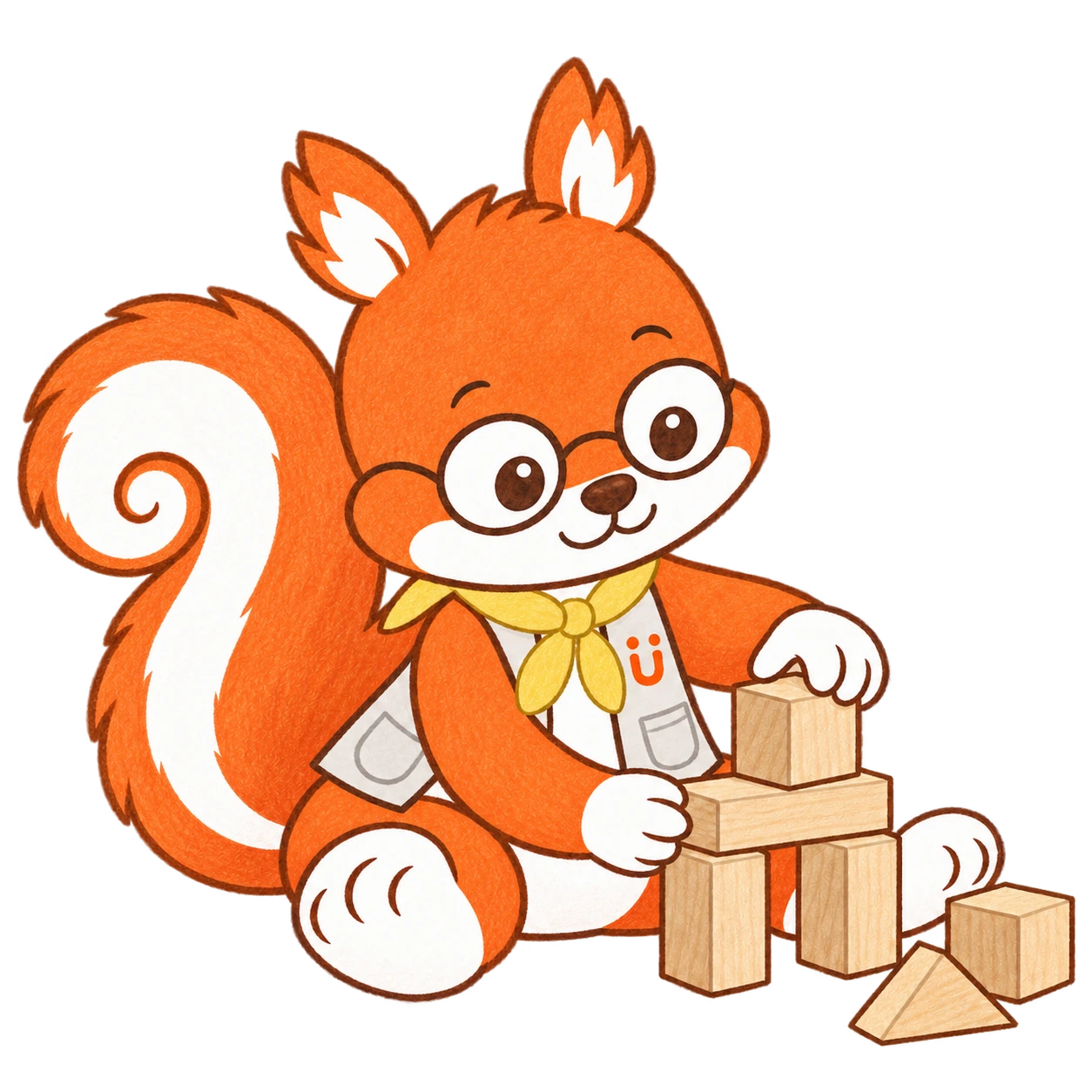
You reach for the spoon.
It’s lunchtime.
You try to scoop up a bite.
But the plate slides away.
this easier?
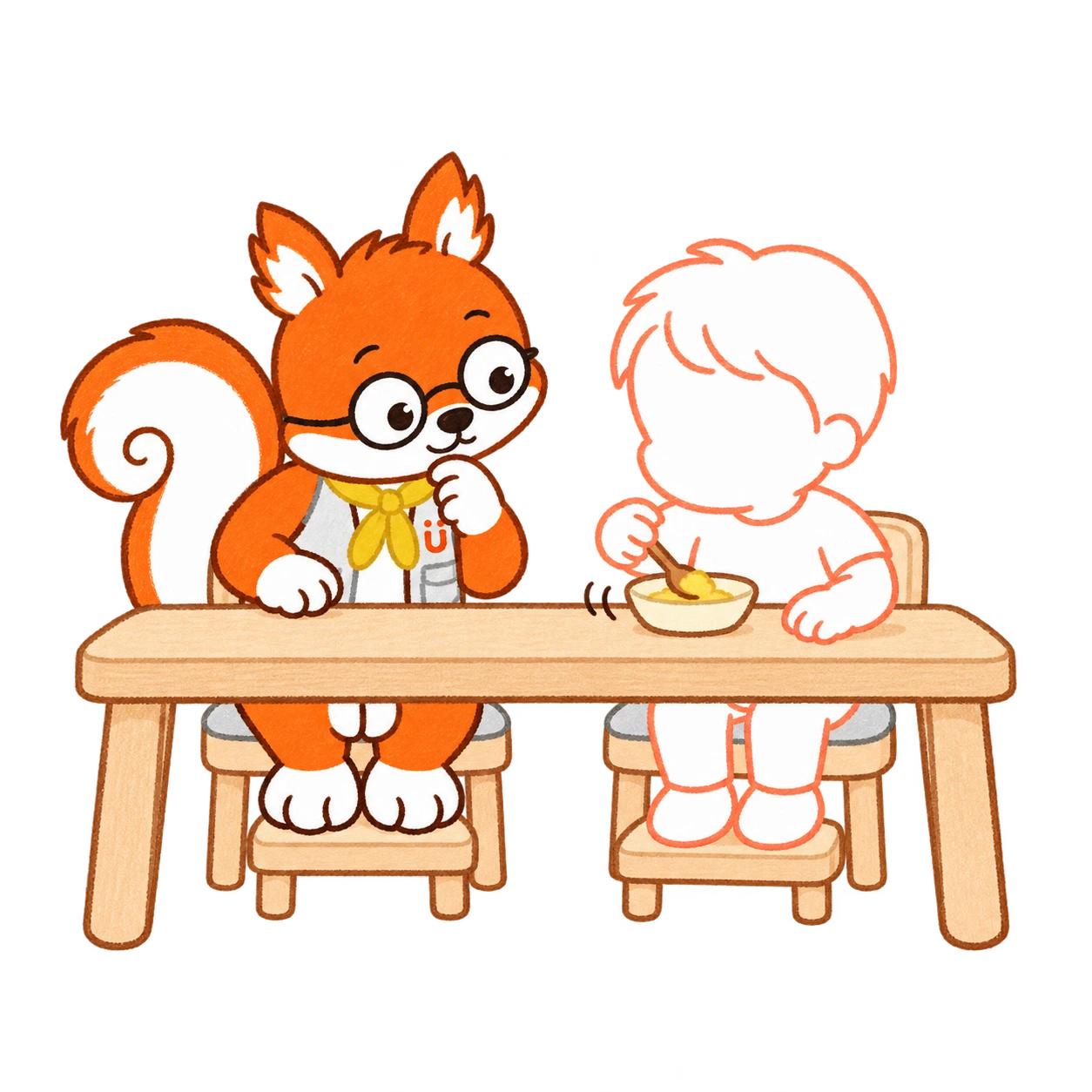
You try again.
There it goes—again!
I lean in for a closer look.
03
I watch your hand.
As you try again,
I watch how you hold the spoon
and move it across the plate.
make your hand tired?
04
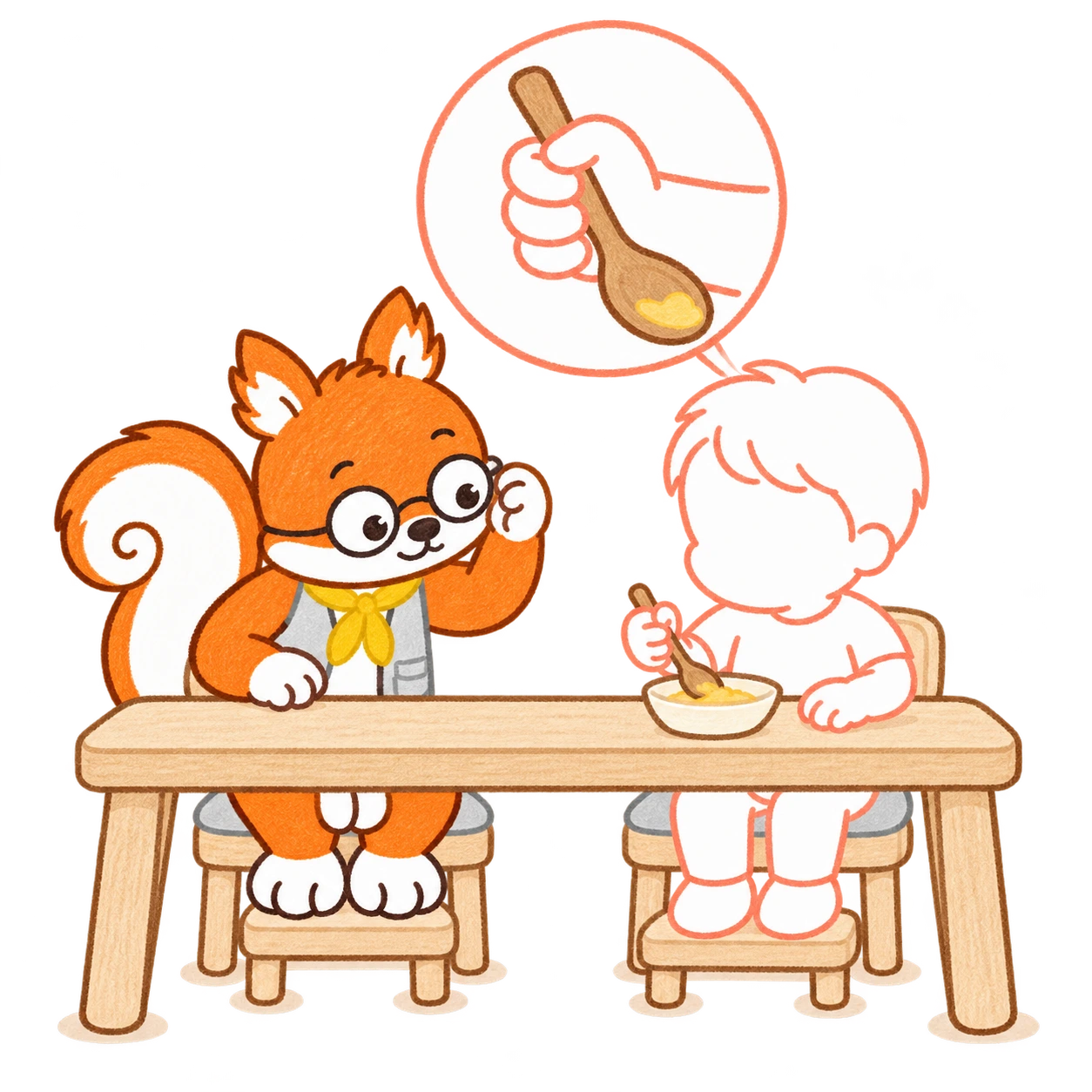
What else could help?
I notice where your feet are resting,
and how you sit.
Then I look back at the plate.
looks tricky.
05
Let’s see what suits you.
make it easier?
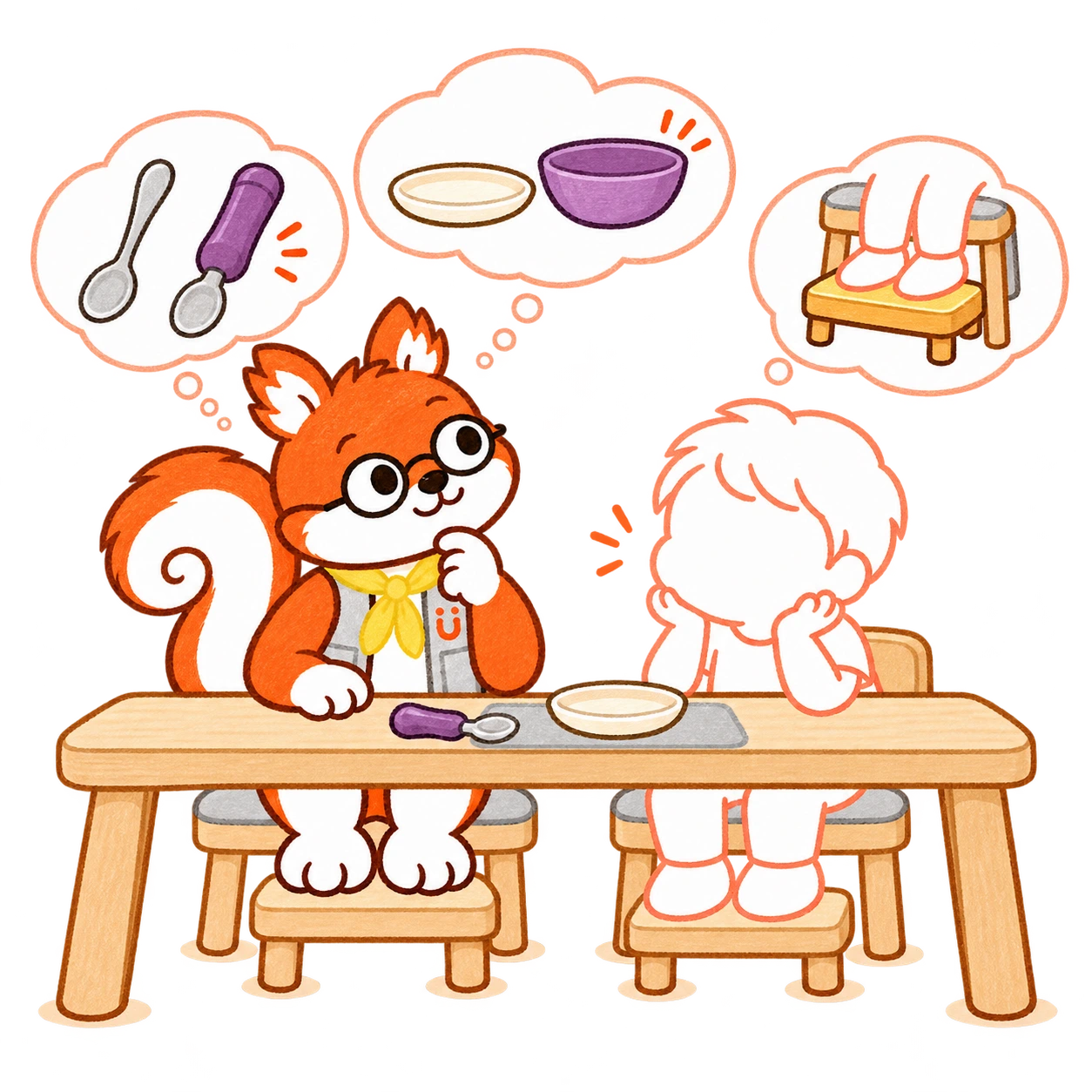
A thicker handle. A shallow plate with a rim.
A mat to keep it still.
I think about your footrest, too.
Let’s see how these feel for you.
06
You reach out again.
I wait and watch.
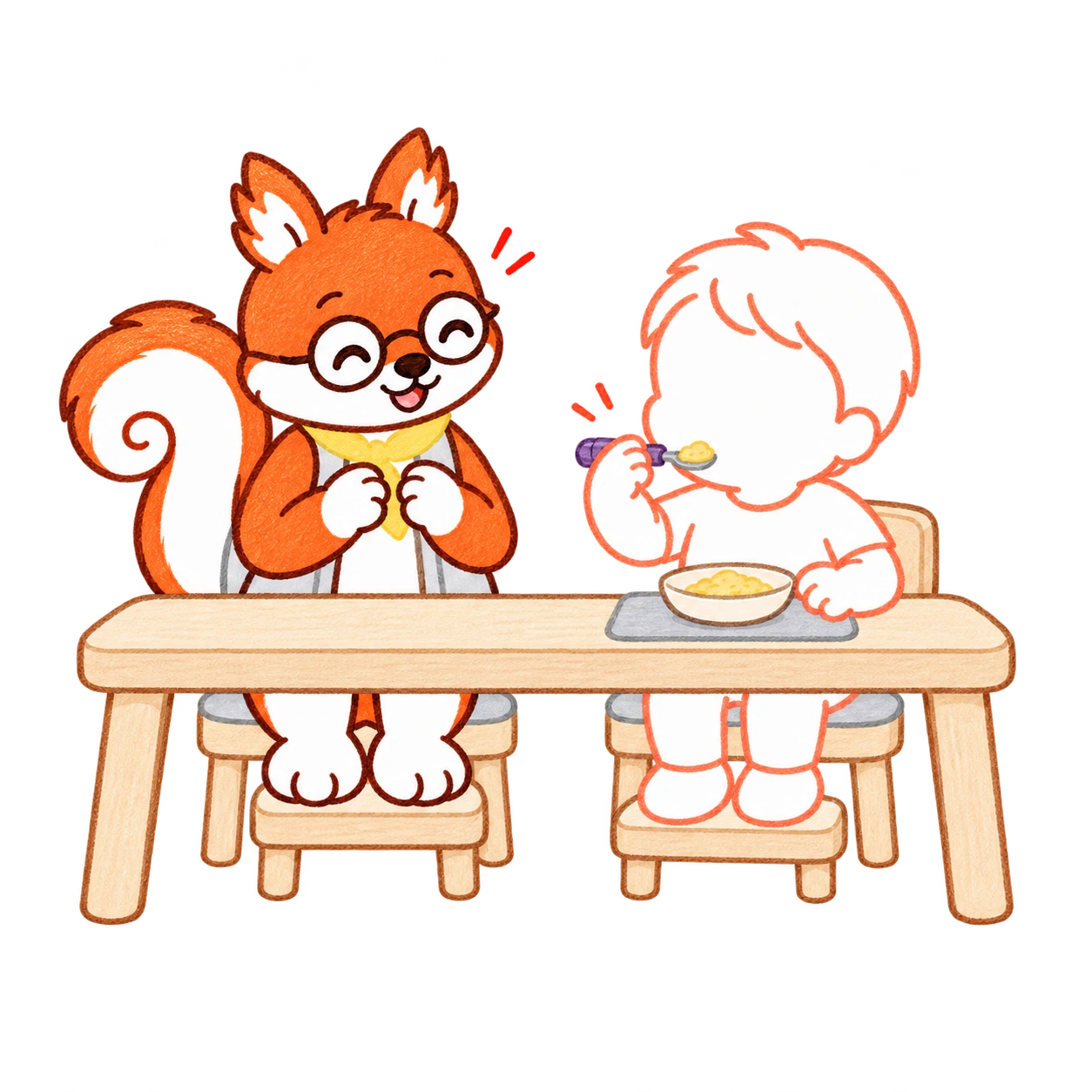
Scoop… and in it goes!
I can’t help smiling.
You reach for another bite.
07
Ooh, and what about this?
Another spoon! Another plate!
I’ve got so many ideas…
interrupt!
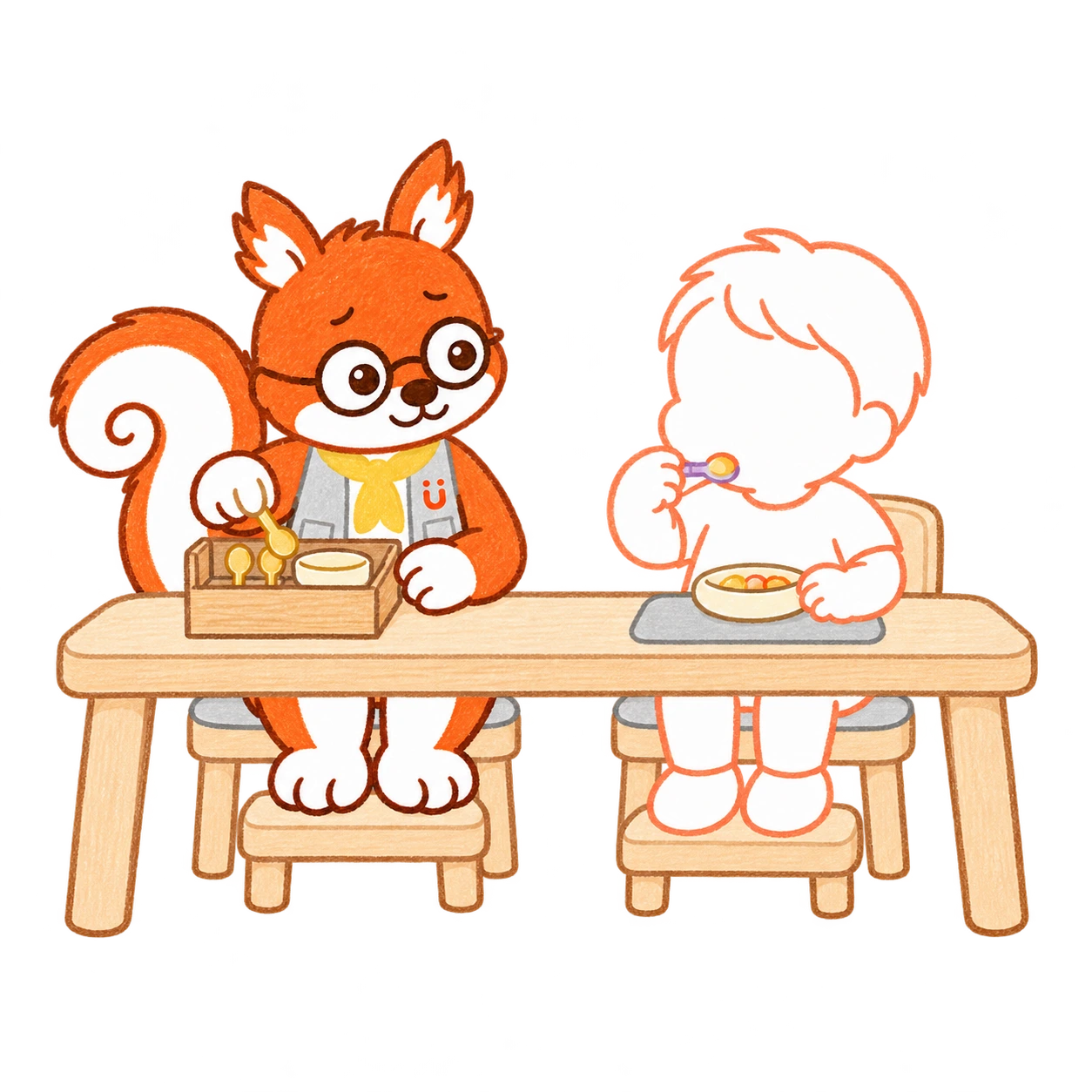
Oh. You’re busy eating.
I’ll put these away.
I don’t need to change a thing right now.
08
The next day…
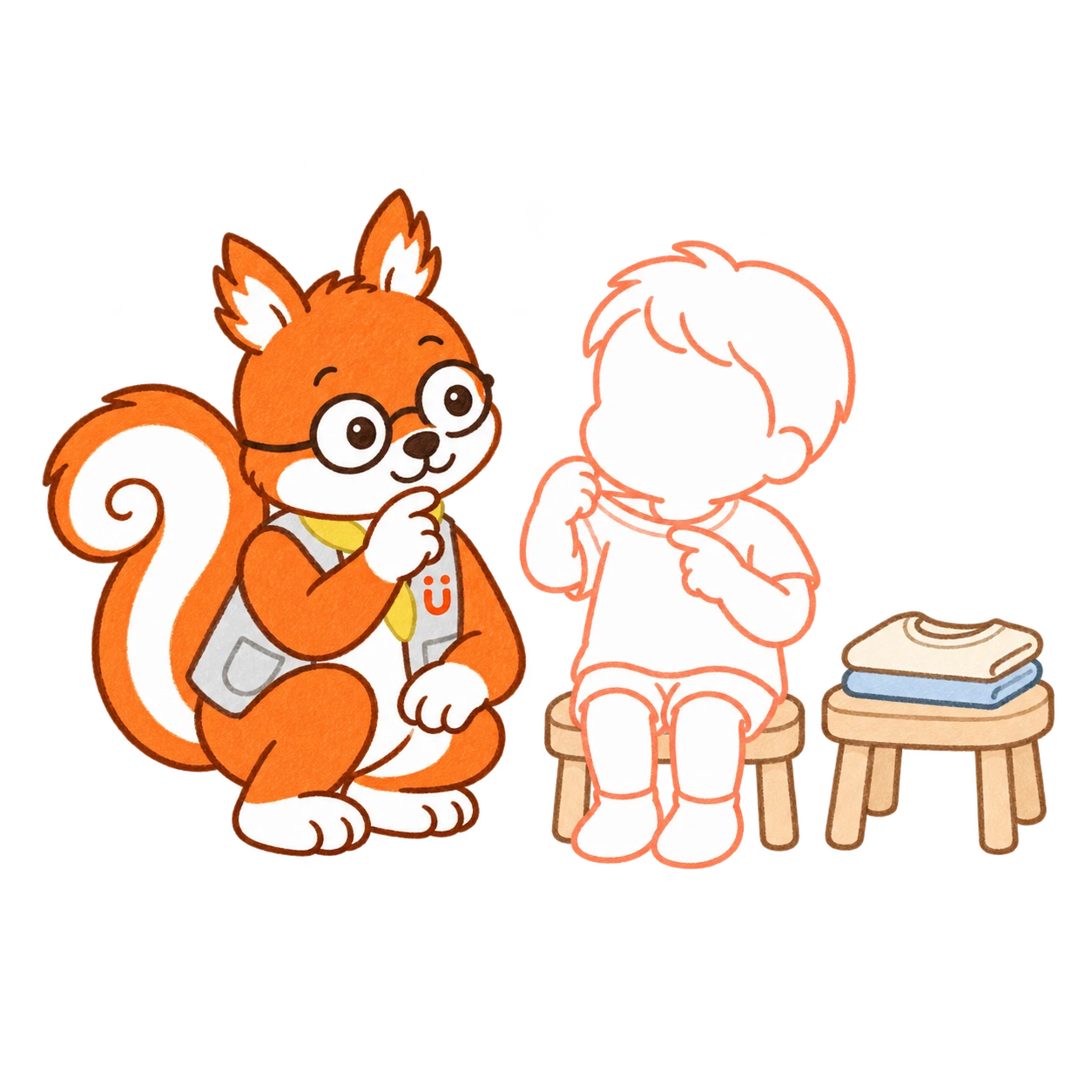
You’ve got your shirt on,
but you keep tugging at the collar.
I crouch down beside you.
“Is something bothering you?”
shirt feel better?
09
Let’s find what
works for you.
Zip up. Draw a picture. Put on your shoes.
There’s so much you might want to try.
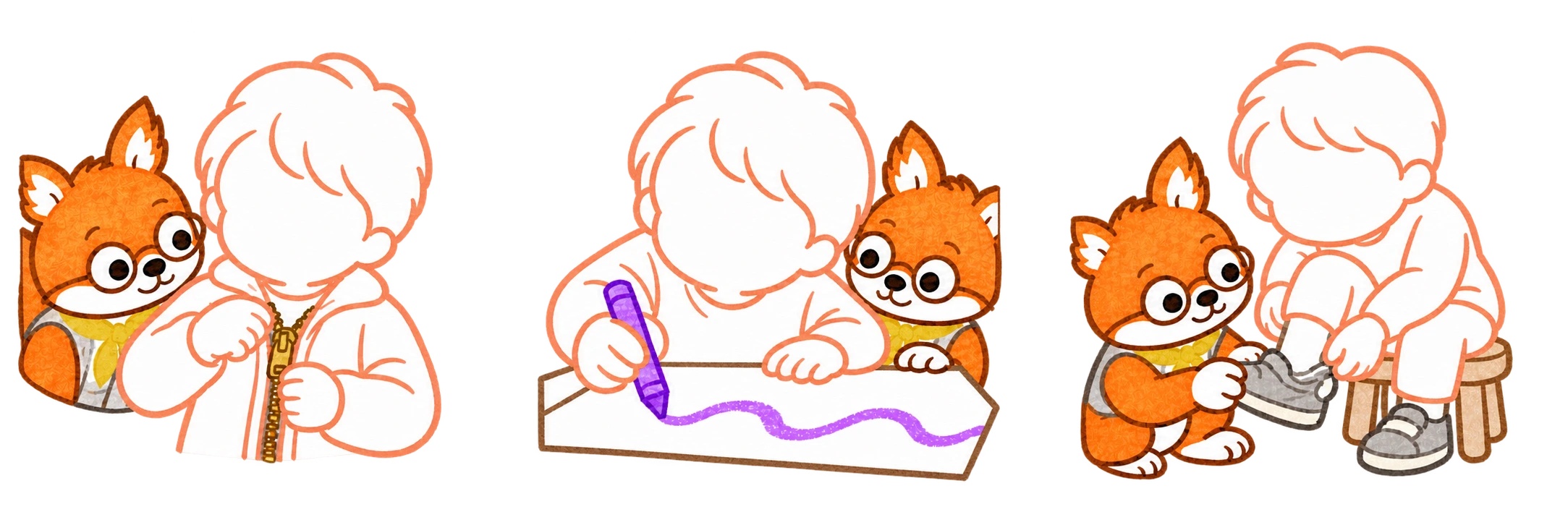
Sometimes I watch. Sometimes I lend a hand.
Let’s find what works for you.
A note for grown-ups
Small changes can make
everyday things easier.
Luke loves figuring things out. Drawing on occupational therapy, he looks for ways to make everyday activities easier and more comfortable. A different tool, a change in seating or a small adjustment to the surroundings may help. The tools in this story won’t suit every child. He watches what happens, then keeps looking for what works for that child.
At mealtimes, he notices how a child grips the spoon and moves their fingers and wrist, whether they tire as they hold it, and how well their head and body are supported. He doesn’t judge their strength or development from a single moment.
Being able to do something doesn’t always mean it feels comfortable. A collar that scratches or a texture that feels unpleasant deserves attention, too.
“Doing it myself” doesn’t have to mean doing it without help. Luke is there to help children take part in the things they want to do, in a way that works for them.
References: NHS: Fine motor skills / Japanese Association of Occupational Therapists: Supporting children’s development (Japanese) / NHS: Using cutlery / NHS: Clothing sensitivities
HugMap Stories · Meet Luke